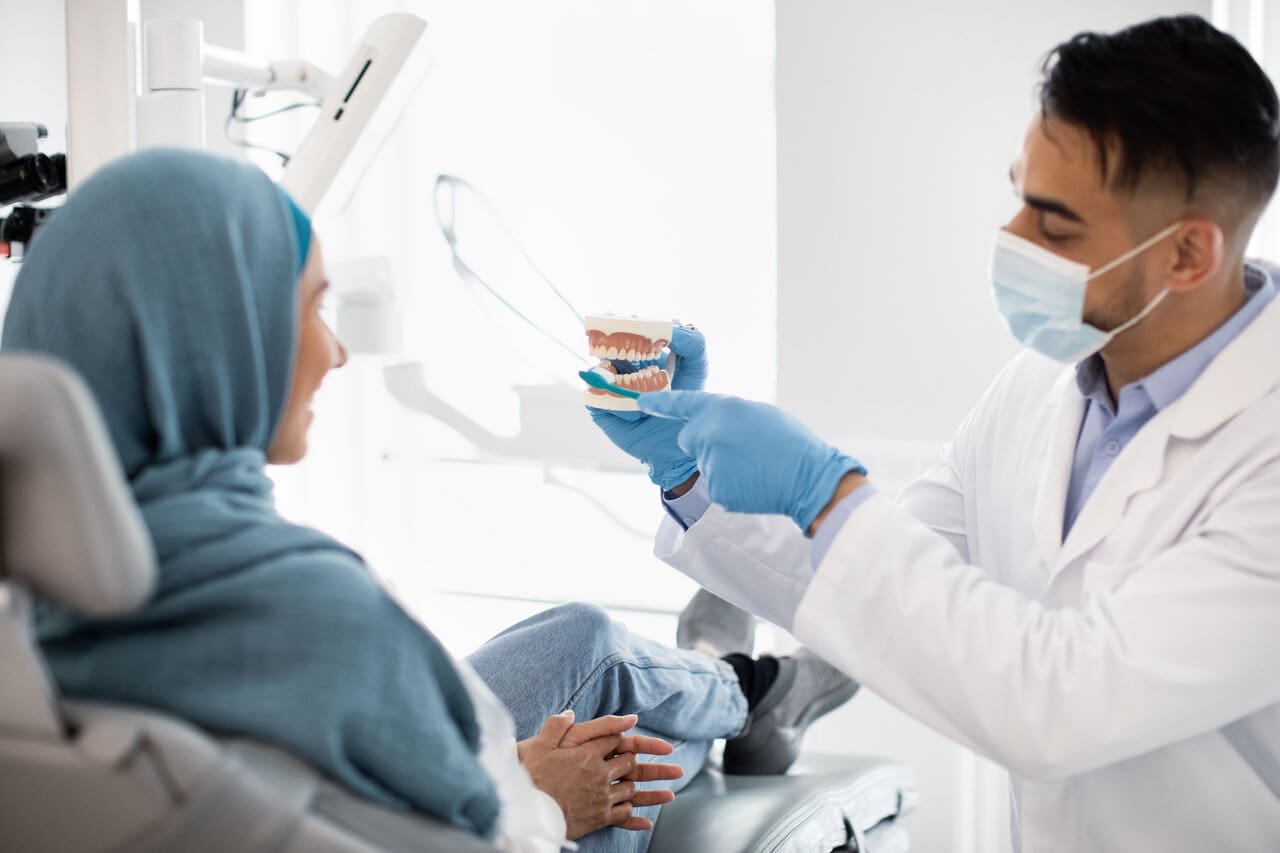
man explaining to a patient

Dental Relines: What Exactly Goes on in This Procedure

Denture relines are procedures where the underside of a denture is reshaped so that it fits more comfortably on the user’s gums. This is necessary as dentures can lose their grip over time and must be relined periodically. The process is usually affordable and often takes very little time. 

This process also adds new material to the inside of the denture to make it fit better and replace any broken or missing parts. When a tooth is extracted, the bone that was once around the tooth root starts to break down. The body reuses the resources sent to the bone since it doesn’t need to surround a tooth.

The removal of teeth alters the shape of the jaw and gums, which leads to a poor fit for dentures. Over time, the fit becomes worse, and the dentures may eventually fall off. A reline helps to improve the fit of the dentures.

Essentially, if only a small adjustment to the fit of your dentures is necessary, your dentist will likely be able to reline them in the office. However, if bigger changes are needed, the dentures will have to be sent to a laboratory, and you will have to go without them for a few days.

Dentures that don’t fit properly can be fixed during the relining process, saving you money in the long run. Consistent oral care is important for overall health, so getting your dentures relined regularly is a good idea.

There are two types of relining, referred to as soft and hard. With either type, a denture reline can be done at a dentist’s office or in a lab. Each type has its advantages and disadvantages.

The Two Kinds of Denture Relines

When choosing, patients can opt for either a soft reline or a hard reline:

  • Soft: A soft denture reline is a type of liner made from a soft, pliable material. This type of relining is used to help improve the fit of a denture and to make the denture more comfortable to wear.

This procedure is done in an office and does not require the dentures to be sent to a lab. They are usually very quick and do not require as much time as a hard reline. However, because the material used for a soft reline is not as durable, it will usually need to be relined more often than a hard reline.

If you have sensitive gums or are new to dentures, a soft denture reline is probably the best option.

  • Hard: On the other hand, a hard reline is more durable than a soft reline. The process is the same, but hard relines often last longer and can be done in the office or lab.

Dentists recommend using a lab because the quality of the materials used is often better than what is available over the counter. However, hard relining can be uncomfortable for patients with sensitive gums. In those cases, hard relines may lead to sore spots.

If you don’t have sensitive gums and you’ve been using dentures for a while, a hard denture reline might be a better choice.

Schedule Denture Relines Today

Book your appointment today at Weymouth Dental Arts if you need denture relines determined and done by a professional. Our office provides patients of all ages customized care for general, cosmetic, and modern dentistry. Visit our website today and learn more!

beautiful woman eating lunch

How Long until You Eat Normally Post-Root Canal Treatment

Proper care for teeth and gums is important for maintaining a bright smile and our overall health and well-being. Poor oral health is connected to several serious health problems like heart disease, stroke, and dementia. That’s why taking care of our teeth and gums is as important as seeing a dentist regularly. Brushing and flossing our teeth twice a day, and using mouthwash, is a good start. But we also need to eat a healthy diet and limit sugary snacks and drinks. If not, bacteria could remain and bore holes into our enamel, resulting in a need for root canal treatment. When dentists remove the infected or damaged pulp from the tooth, root canals are a procedure. Pulp is the tissue containing the tooth’s blood vessels and nerves. Once removed, the dentist will clean and seal the tooth to prevent further internal damage. After root canal surgery, you will likely wonder how long you must wait to eat. All will soon become clear as we go through that topic in today’s article.

So, Just How Long?

While there is no specific duration on when you can resume your normal eating and drinking habits, the rule of thumb is to wait until the numbness from the dental work has fully worn off before eating. If not, you may bite your cheek or tongue without realizing it, which can be painful and lead to further infections.

Book your appointment today for expert dental care in Weymouth!

Book Appointment Call Us

What Can You Do Until Then? 

Fortunately, you can still eat. Just remember to follow these post-root canal treatment care tips:
  • Eat on the other side of the treated area: If you just had a root canal, it’s important to eat on the opposite side of your mouth from where the procedure was done. As mentioned earlier, the treated side of your mouth is still numb, and you could accidentally bite yourself.
  • Chew carefully: This may seem like an obvious thing to do, but it’s very important. When you have root canal surgery, your teeth and jaw are very sensitive and can be easily damaged. Chewing your food slowly and carefully will help protect your teeth and jaw and help you avoid pain.
  • Stay away from extremely cold or hot foodstuffs: When eating after a root canal procedure, it is best to avoid hot foods and/or beverages. Food and drinks that are very hot can cause burns, so it is recommended to wait at least until the next day. The heat could make the pain in your tooth/teeth worse.
You should avoid very cold foods and drinks following a root canal procedure because they can compound tooth/teeth sensitivity after the anesthesia wears off.
  • Go soft: When ready to eat again after root canal surgery, stick to soft foods. Avoid hard, crunchy, or chewy foods, as they could damage your teeth. Soft foods do not require as much chewing as harder foods, making them much easier to eat and swallow. Mashed potatoes and canned soup will do. Remember not to heat them too high or eat them straight from the fridge.

Schedule a Root Canal Treatment Now

Book your appointment today at Weymouth Dental Arts for a much-needed root canal treatment. We provide patients of all ages with customized care for general, cosmetic, and modern dentistry. Visit our website today and learn more!
cute girl with a cute smile

Dental Cleaning for Children: Essential Things to Know

It’s no secret that dental cleanings are important for children. But what does the process of dental cleaning for children entail? At what age should children go to the dentist for a cleaning? Here’s everything you need to know about dental cleaning for children.

What Does the Process of Dental Cleaning for Children Look Like?

If you’re a parent, you know that taking your child to the dentist for cleaning can be challenging. But it’s important to ensure that your child’s teeth are properly cared for, starting with regular cleanings. So what does the process of dental cleaning for children look like?

First, the dentist will look at your child’s teeth and assess their overall health. They will then use a small mirror to get a closer look at each tooth and any areas that may be difficult to see. Next, the dentist will use a small pick to remove any plaque or tartar that has built up on the teeth.

After the teeth have been thoroughly cleaned, the dentist will floss your child’s teeth and then apply a fluoride treatment. This treatment will help to protect the teeth and prevent cavities. Finally, the dentist will give tips on caring for your child’s teeth at home.

At What Age Should Children Go to the Dentist for Cleaning?

Children should go to the dentist for regular cleanings and checkups as soon as their first tooth comes in. It’s important to get into the habit of taking your child to the dentist early so that they get used to the idea of going to the dentist and start to develop good oral hygiene habits.

How Often Should You Bring Your Child for a Dental Cleaning?

The American Dental Association (ADA) recommends that children have their first dental visit within six months of getting their first tooth and every six months after that. However, some children may need to be seen more often, depending on their oral health needs.

If your child has good oral hygiene and isn’t at risk for tooth decay or other dental problems, then once every six months should be fine. However, if your child has poor oral hygiene, is at risk for tooth decay, or has other dental problems, they may need to be seen more often.

What Is the Importance of Having Professional Dental Cleaning for Your Children?

Professional dental cleanings are essential for children for a number of reasons.

First, they help remove plaque and tartar from the teeth. Plaque is a sticky film of bacteria that forms on the teeth, and tartar is plaque that has hardened and becomes difficult to remove. If plaque and tartar are not removed, they can lead to tooth decay and gum disease.

Second, professional dental cleanings can help prevent cavities. Cavities are holes in the teeth that are caused by decay. They can be very painful, and if they’re not treated, they can lead to serious health problems.

Third, professional dental cleanings can help children develop healthy oral hygiene habits. When children regularly see a dentist or hygienist for professional cleanings, they learn how to care for their teeth and gums properly. They know how to brush and floss correctly and the importance of good oral hygiene.

Final Thoughts

If you’re looking for a way to help your children have healthy teeth and gums, schedule professional dental cleanings as part of their oral care routine. It’s one of the best things you can do for their oral health.

Do you need a children’s dentist in Weymouth? Our pediatric dentists at Weymouth Dental Arts can create a dental care program for your child. Start with dental cleaning by booking an appointment today.

woman with a beautiful smile

Breaking Down the Benefits of Dental Implants

When it comes to choosing dental implants, patients have a lot to consider. The cost, the surgery, the recovery time—it can all be a bit overwhelming. But when you break it all down, there are some clear benefits to dental implants that make them worth the investment.

Dental implants are the closest thing to natural teeth. Unlike dentures or bridges, which rest on top of the gums, dental implants are surgically placed in the jawbone. This gives them a much more secure fit and makes them feel more like natural teeth.

Dental implants are also much more durable than other dental options. With proper care, they can last a lifetime. So if you’re still on the fence about getting dental implants, it’s worth exploring the wonders they can do to your oral health.

What are the Benefits of Dental Implants?

  1. Dental Implants Feel and Act Like Natural Teeth

One of the most significant benefits of dental implants is that they feel and act like natural teeth. This is because they are surgically implanted into the jawbone, and over time they fuse with the bone, creating a strong and sturdy foundation for the new teeth. This means that you can eat and drink without worrying about your teeth falling out, and you can also brush and floss them just like you would your natural teeth.

  1. Dental Implants Prevent Bone Loss

When you lose a tooth, the bone that supported that tooth begins to deteriorate. This is because there is no longer any stimulation to that area of the jawbone. Over time, this can lead to a significant loss of bone mass, which can then lead to a change in the shape of your face. Dental implants provide the stimulation that the jawbone needs to stay healthy and prevent bone loss.

  1. Dental Implants are a Permanent Solution

Unlike dentures, which can slip and need to be replaced every few years, dental implants are designed to last a lifetime. This means you can enjoy the benefits of your new smile for many years to come.

In addition to being permanent, dental implants are also very strong and durable. They are made to withstand the force of chewing, so you can eat all of your favorite foods without worry. They are also resistant to wear and tear, so you don’t have to worry about them breaking or becoming damaged.

  1. Dental Implants Prevent Facial Sagging and Premature Aging

Losing teeth can cause several problems, both cosmetic and functional. One of the most visible problems is facial sagging, which can make a person look much older than they actually are. Dental implants can help to prevent this by providing support for the facial structures and preventing them from collapsing. This can help a person to maintain a more youthful appearance for longer.

  1. Dental Implants Improve Jaw Function

Dental implants can also help to improve the function of the teeth and jaw. When teeth are missing, the jawbone can start to shrink and change shape. This can lead to problems with biting and chewing, making it difficult to speak clearly. Dental implants can help to prevent this by providing support for the jawbone and keeping it healthy.

The Bottom Line: Dental Implants Offer Plenty of Benefits to Your Oral Health

When it comes to your oral health, there are plenty of benefits that come along with dental implants. Not only can they help to improve the appearance of your smile, but they can also help to restore function and chewing ability. If you’re missing one or more teeth, then dental implants may be the right solution for you.

If you are considering dental implants in Weymouth, MA, it’s important to consult with a qualified dentist to ensure that they are the right solution for you. The team at Weymouth Dental Arts is experienced in placing and caring for dental implants, and we can help you determine if they are the best option for you.

woman healthy teeth smile

Safe Ways to Achieve a Whiter, Safe, and Better Smile

Are you unhappy with the color of your teeth and looking for safe ways to get whiter teeth? You’re not alone! Many people want whiter teeth and are willing to try different methods to achieve their goals. 

Having white teeth is something that many people aspire to. After all, white teeth are often seen as a sign of good oral health and hygiene. Plus, let’s be honest – white teeth just look good.

There are several safe and effective ways to whiten your teeth. The best method for you will depend on your circumstances.

Here are some tips to help you choose the right method: 

  1. Talk to Your Dentist: Your dentist is the best person to advise you on whitening your teeth safely. They can assess your teeth and determine the cause of the discoloration. They can also advise you on the best method to achieve your desired results. 
  2. Avoid DIY teeth whitening: Many DIY teeth whitening products are on the market, but avoiding these is essential. Many of these products are not safe and can cause damage to your teeth. It’s best to leave teeth whitening to the professionals. 
  3. Be patient: Teeth whitening takes time, and you may not see results immediately. Be patient and follow the instructions carefully to achieve the best results. 
  4. Avoid Foods and Drinks That Can Stain Your Teeth: Certain foods and beverages can cause stains on your teeth. These include coffee, tea, red wine, and dark-colored fruits and vegetables. To help prevent stains, brush your teeth after eating or drinking. 
  5. Avoid Smoking: Smoking is one of the leading causes of tooth stains and discoloration. If you want to achieve whiter teeth, avoid smoking.
  6. Eat Natural Teeth Whitening Foods: A few foods can help whiten your teeth naturally. Eating these raw foods will help scrub your teeth and remove any surface stains. Here are some of the best options to consider:
  • Apples – The malic acid in apples can help remove surface stains from your teeth.
  • Celery – This crunchy vegetable is abrasive, which can help scrub away surface stains.
  • Strawberries – The vitamin C in strawberries can help reduce inflammation and blemishes and whiten your teeth.
  • Pineapple – This tropical fruit contains bromelain, effectively removing stains.
  • Yogurt – The lactic acid in yogurt can help to break down stains, while the probiotics can help promote oral health.
  1. Practice Good Oral Hygiene: Good oral hygiene is essential for overall health and can also help prevent stains on your teeth. Be sure to brush, floss regularly, and see your dentist for regular checkups. 

Conclusion

If you want whiter teeth safely, following your dentist’s tips is the best way to go about it. You can do several things at home to help whiten your teeth, but if you want to avoid any potential damage to your teeth, it’s best to leave it to the professionals. Following the tips in this article can help you achieve the safest and most effective results before and after your whitening treatment.

Get professional teeth whitening from us at Weymouth Dental Arts. We offer customized dental care to ensure that your smile is healthy and looks its best. Our experienced team provides a variety of dental treatments, and we welcome patients of all ages. We use the latest technologies to make your visit quick and comfortable and thoroughly evaluate and treat all issues related to oral health. Book an appointment now!

dentist holding jaw model

Why Dental Implants from Weymouth, Ma Are Good Investments

Dental implants are great replacements for gap or broken teeth since they are strong, durable, and indistinguishable from real pearly whites. Implants can help improve your smile, eating and talking, and oral health. And while some patients may feel that they are not worth the investment of time and money, these reasons will prove the exact opposite:

They Last Long

When you take care of your dental implants and visit your dentist for regular checkups, your implants can last for many years. Clinical research has shown that dental implants last for 20+ years in over 90 percent of cases, and smaller studies have shown that they can last for the duration of a person’s life! With proper care, your dental implants can give you a long-lasting, beautiful smile!

They Are Conveniently Maintained

Like your natural teeth, you must brush your implants twice daily and floss them to remove plaque and bacteria. Use a soft-bristled toothbrush and avoid too much pressure, which damages the implants. You should also visit your dentist regularly to check and clean your implants.

They Preserve Other Pearly Whites

Unlike dentures and bridges, dental implants do not rely on the support of surrounding teeth. This means that there is no added stress on your natural teeth, which helps to preserve them. Additionally, implants decrease the risks of complications for existing teeth. In the end, you’ll save time and money in the long run with fewer dental visits.

They Contribute to Gum and Bone Growth

When a tooth is missing, the area in your jawbone where the tooth used to be will slowly begin to dissolve. This is due to the absence of anything stimulating the gums and bone in that region. When you lose your natural pearly whites, your jawbone begins to resorb. As the bone resorbs, your facial structure can start to sink in, causing your face to sag and more wrinkles to appear.

Dental implants help prevent this by stimulating the gums and bone growth in the missing tooth area, providing a reason for your jawbone to stick around, which prevents premature aging.

They Enable You to Experience Normal Sensations and Activities Again

Dental implants are also a great way to improve the taste of your food. While dentures are a viable, more affordable option, they cover the roof of your mouth, containing taste buds. When covered, you can’t taste your food as well. On the other hand, dental implants eliminate the need for dentures and give you back the roof of your mouth and all the taste buds. This means that food will taste much better!

Missing teeth or ill-fitting dentures can also result in a pronounced lisp, making it difficult to speak confidently and clearly, especially when it matters. Dental implants are great replacements for missing teeth since they secure restoration. You’ll never have to worry about speech impediments ever again!

So while dental implants cost between $1,500 to $6,000, these reasons more than verify how good an investment they are, especially since they look and act like natural teeth.

Conclusion

Make this investment now by booking your appointment at Weymouth Dental Arts today! Our office offers dental implants in Weymouth, MA, that last forever, so long as you take care of them like regular pearly whites! Learn more through our website or set your schedule from there, too!

woman with great teeth smiling

Considerations When Getting Partial Dentures in Weymouth, Ma

If you’re considering getting partial dentures, you have a few missing teeth but don’t want to replace your entire upper or lower teeth. Partial dentures are removable appliances made from either plastic, metal, or both. These are placed in a patient’s mouth to help restore their smile and boost their dental health. This cosmetic treatment is for people with a few missing teeth or teeth falling out.

While they can be a good solution in the above cases, here’s what you need to consider before getting them:

You Must Have Valid Reasons

If you’re missing a few teeth and don’t want to get full dentures or removable flippers, partial dentures may be a good option. If you have gum recession, excess gums, or a job that requires biting and chewing, partial dentures may help. And if you’re missing teeth in the front of your mouth, partial dentures can improve your smile.

But if you have teeth- and gum-related problems that can be resolved by proper oral hygiene or a visit to the dentist every six months, don’t count on getting these appliances any time soon.

You Must Know How Many Teeth Will Be Replaced

If you need to replace some of your teeth, you may want to consider partial dentures. Partial dentures are a good option for teeth replacement in your upper or lower set while improving your smile. If your dentures are well-fitted and comfortable, they can restore regular functions such as biting and chewing.

Be Mindful of Financing

There are ways to finance partial dentures, so you don’t have to spend all your money on them at once. Talk to your dentist about qualifying for a dental loan or see how insurance can cover a portion of the cost.

There Are Various Kinds of Denture Materials

The materials used in partial dentures can greatly impact the price and appearance of your dentures. For instance, if you choose to have partial metal dentures, it will cost you more money. 

On the other hand, polymer partial dentures are inexpensive, artificial tooth replacement options that are also available in various colors. 

Acrylic dentures are another type made out of plastic. Like their polymer counterparts, they are usually less expensive than other types of dentures and are affordable options for patients looking to save on cost. 

You may consider using dental resin if you want a more aesthetically pleasing appearance for your partial dentures. Just remember to talk to your dentist about the various materials to come in prepared for the cost and goal you have in mind.

There Are Mouth Attachments to Choose From, Too

How your dentures fit can also affect how well they stay in place. If your dentures fit well and don’t slide around, they’re more likely to stay in place. 

Soft attachments are a good choice if you constantly adjust and put your dentures back in place. Polishing attachments may be a good option if you don’t mind wearing your partial dentures for long periods to maintain a great smile.

Get Fitted for Partial Dentures at Weymouth Dental Arts

For partial dentures in Weymouth, MA, contact Weymouth Dental Arts right now! We provide patients with customized care using the latest technologies in general, cosmetic, and emergency dentistry. Book your appointment now through our website!

lit white cigarette stick

The Effect of Cigarette Smoking on Dental Implants

Smoking is one of the worst things you can do for your teeth and gums. It’s a leading cause of gum disease and can lead to other serious dental problems, such as tooth decay and oral cancer. Smoking can also heighten the risk of implant failure if you have dental implants.

What Are Dental Implants and Implant Failure?

Dental implants are a popular way to replace missing teeth. They are anchored to the jawbone, and the bone grows around the implant. However, some lifestyle factors may cause them to fail, such as nicotine addiction. Nicotine interferes with osseointegration, and this can lead to implant failure.

Nicotine is a highly addictive substance found in cigarettes and other tobacco products. When nicotine is present in the body, it increases the risk of developing cancer. It also increases the risk of developing other serious health problems like heart disease and stroke.

Implant failure is a serious complication that can occur when nicotine is present in the body. It can cause the implant to become loose, and it can also lead to infection. Infection can spread to the surrounding tissue, leading to further complications, such as bone loss.

How Does Smoking Affect Your Implants?

Smoking can interfere with the success of dental implants for several reasons. For one, it can delay healing after surgery. Implant surgery is considered a delicate procedure, and the bones and tissues need time to heal properly. Smoking can interfere with this process and delay healing.

Smoking can also increase the risk of infection. Infection is one of the most common complications of implant surgery. Smoking can make it more difficult for the body to fight infection.

Furthermore, smoking can cause the gum tissue to shrink. That can make it more difficult to place the implant in the jawbone and increase the risk of the implant getting rejected by the body.

Finally, smoking can stain the implant, making it more challenging to match it to your natural teeth.

If you are considering dental implants, it is crucial to quit smoking before surgery. Doing that will give you the best chance of success. Many resources are available to help you quit smoking, so talk to your dentist or doctor about what might work best for you.

Is There a Safe Amount of Nicotine for Dental Implants?

There is no safe amount of nicotine for dental implants. Even small amounts of nicotine can increase the risk of implant failure. If considering dental implants, you should quit smoking and use other tobacco products before the procedure.

If you are unable to quit smoking, you may be able to use a nicotine replacement product, such as patches or gum. These products can help to reduce the amount of nicotine in your body and may help to reduce the risk of implant failure.

Before the procedure, you should speak to your dentist about the risks associated with dental implants. They will be able to advise you on the best course of treatment for your situation.

Conclusion

Smoking is a major risk factor for dental implant failure. It decreases the success rate of dental implants and increases the risk of implant failure. Smokers are also more likely to experience complications after dental implant surgery. If you are considering dental implants, quitting smoking is the best way to improve your chances of success. Talk to your dentist about ways to quit smoking and help you reduce your risk of implant failure.

If you need dental implants in Weymouth, MA, or an emergency dentist to help you with your dental concerns, reach out to us. Weymouth Dental Arts have a highly experienced team and offer a variety of dental treatments. In our office, we welcome patients of all ages. Our office also uses the latest and most advanced technologies to make your visit as quick and comfortable as possible. 

patient waiting for root canal treatment

Useful Tips When Preparing for a Root Canal Procedure

A root canal is a type of dental procedure done to save a tooth that is damaged or infected. It is considered to be an invasive treatment because it involves drilling into the tooth to remove the damaged or infected tissue. There is no one specific way to prepare for a root canal, but it is important to remember that it is a serious procedure. You can use the following strategies before your periodontist performs the procedure that may help you cope and reduce patient anxiety.

Ask Your Questions

The best way to ensure that you’re comfortable during a dental procedure is to ask the dentist about your concerns beforehand. This way, you can be sure that you understand what to expect and that your dentist is aware of your problems.

Remember to ask your doctor about the level of discomfort you can expect during your procedure. It is helpful to know how much discomfort you may feel so that you can mentally prepare yourself.

Avoid Smoking or Drinking 

It’s best to avoid smoking and drinking alcohol while you’re undergoing a root canal procedure, as they can increase your risk of developing an infection. Smoking can also slow down the recovery process.

Pay Attention to Antibiotics

Your dentist will likely prescribe antibiotics if you are having a root canal. You should discuss with your dentist how long you will need to take the drug. Additionally, ask about any potential side effects of taking the antibiotic.

Take Pain Medications

Be sure to follow any instructions given to you regarding taking pain medication before or after your treatment. Pain medication can help manage pain experienced during and after the procedure. If you don’t take the medication as directed, you may experience more pain or discomfort.

Talk to Your Closest Friends

A root canal is a treatment used to repair a tooth that has been damaged by decay or infection. If you know someone who has had a root canal, ask them about their experience. It may help to have an idea of what to expect from the procedure.

Conclusion 

A root canal is a treatment to repair and save a tooth that is badly decayed or infected. It is a common procedure that dentists perform every day. Although a root canal is a simple procedure, some people may experience anxiety before having the treatment. 

There are a few things that you can do to help ease your anxiety before a root canal. First, be sure to choose a dentist that you trust and feel comfortable with. If you have any questions or concerns, be sure to ask your dentist beforehand. You can also ask your dentist about sedation options, which can help you relax during the procedure. 

​​Once you’re in the dental chair, take a few deep breaths and try to relax. The procedure itself is usually not painful, and you should only feel a slight discomfort. If you do feel any pain, be sure to let your dentist know.

During the procedure, it is also essential to stay calm and use relaxation techniques. If you’re considering a root canal, be sure to discuss all of your options with your dentist so that you can make the best decision for your oral health.

Are you looking for dental implants in Weymouth? Our team is highly experienced and offers a variety of dental treatments. Patients of all ages are welcome! Book your appointment!

Preparing patient to get dental implants

5 Things to Consider Before Choosing Dental Implants

People often think that the only people who could benefit from dental implants are those with severely broken teeth, but the truth is quite the opposite. People who have healthy teeth and gums and are otherwise healthy can also get dental implants. 

You might be wondering if implants are the best choice for someone like you. Here are a few considerations if you want to know if you are a good candidate for dental implants:

Type of Dental Implant You Need

One of the first questions you should be asking is, “What kind of implant is best for me?” The answer to this question is always the same: “It depends.” This is because dental implants come in different sizes and shapes.

But most dental implants can be put into four groups:

  • Dentures attached to implants
  • Dentures held in place by implants and a bridge
  • Denture held in place by implants with a cantilever restoration
  • Implant Abutment Retains Complete Dentures

How the implant fits into your mouth and how it is attached to your jawbone determines the type of implant.

Your Age

Everyone who is a good candidate can get dental implants, but your age and gender may play a role. The more teeth you’ve lost and the older you are, the more likely you’ll need dentures held in place by implants.

Dental implants are more likely to work for people who are healthy, have strong bones and gums, and have lost a few or all of their teeth.

The Health of Your Teeth

Your oral health’s the most important thing to consider when deciding if you are a good candidate for dental implants. This is because your bone and gum tissues must be in good shape. This is because dental implants are meant to stay in your mouth for the rest of your life.

If your bone and gum tissues aren’t strong enough, the implants might not stay in place as well and might break. In the same way, if you don’t take care of your teeth, you’re more likely to get gum disease and lose bone.

Your Medicines Or Health Problems

You should also think about your medical or dental history and any other health problems you may have. If you’ve had dental work or braces before, you may have lost bone or had some connective tissue taken away. 

If such is the case, you’ll probably need to take more precautions or go through more therapy to make sure you have enough bone for the implants to work.

It’s much easier to fix this problem before you get dental implants, so you don’t have to undergo a more invasive procedure.

Additional Risk Factors

People who’re thinking about getting dental implants may also be at risk of the following health problems and habits. Both smoking and drinking alcohol can slow the healing of bone and gum tissue. 

Tobacco smoke can also dry out your mouth and make you more likely to get an infection. Keeping away from these and other recreational drugs will make an implant less likely to be rejected.

Conclusion

Everyone who wants them can get dental implants, but before getting them, there are a few important things to consider. Your current oral health and age will be considered when deciding if you are a good candidate for dental implants. 

If you’ve got any problems about whether or not you are a good candidate for dental implants, please talk to a dental professional. They can look at your oral health and all the relevant factors to decide if dental implants are a good choice for you. 

Customized dental care is what your smile needs. The staff at Weymouth Dental Arts is so well-trained and why we provide so many different options for dental care, such as dental implants in Weymouth, MA. To ensure that your visit to our office is both efficient and pleasant, we make use of cutting-edge equipment. Contact us today and discover treatments that have an impact on your dental health.

781-650-7599